
Solutions
Advantages
Four families of advantages — profitability, quality, productivity, environmental impact — measured with every pour. The complete tour of wine on tap, point by point.
In figures
Advantages you can measure.
Advantages
Profitability
The first advantage of wine on tap is financial: every glass poured is a glass sold, with no leftover wine thrown away. Profitability comes down to losses avoided, margin per glass, and packaging management costs.
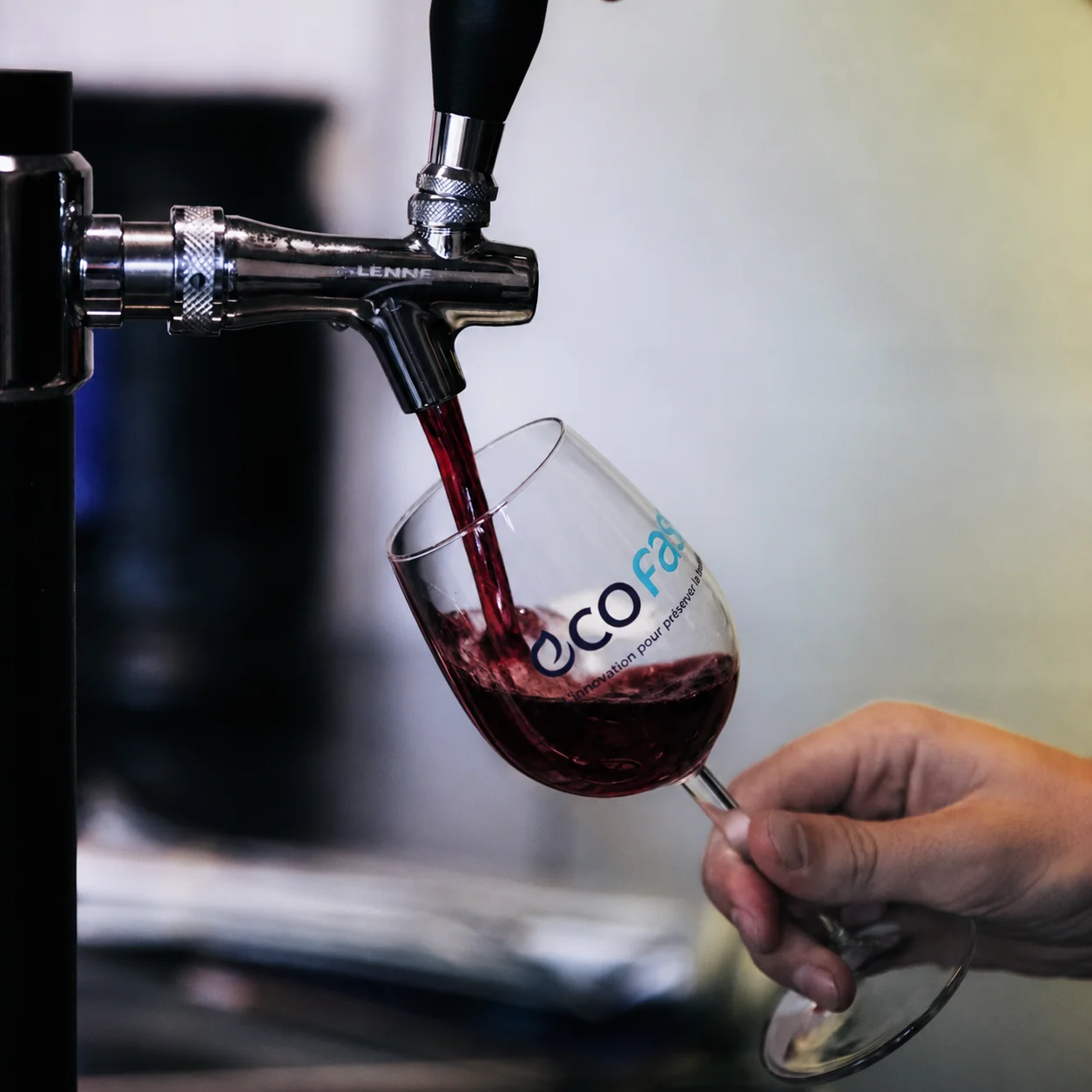
- Reduce losses: wine protected from air no longer oxidizes, no leftover wine from an opened bottle is thrown away.
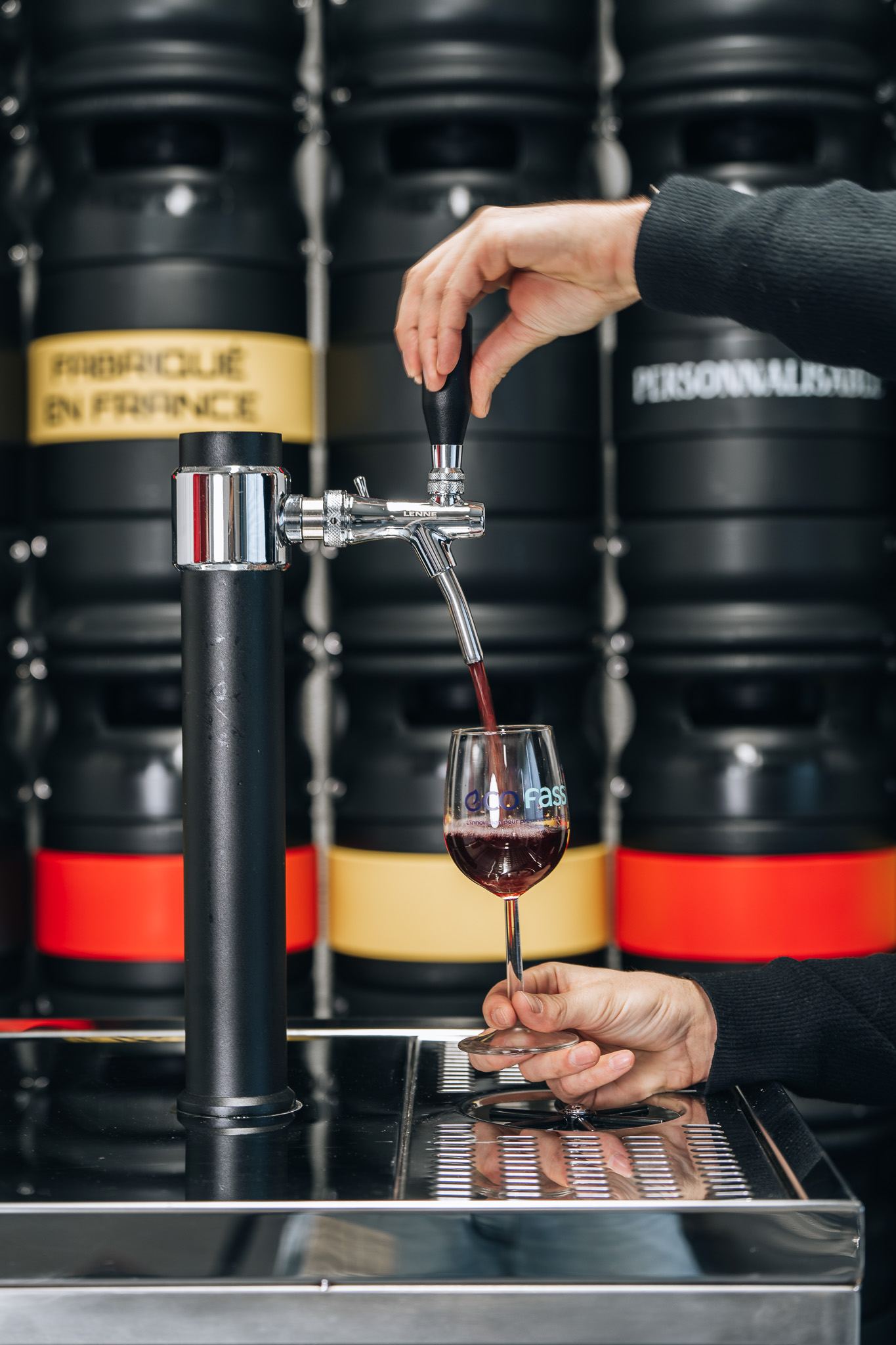
- Improve margin: serving by the glass from a keg controls the cost of every glass poured.
- Optimize costs: fewer packaging materials to buy, store and recycle than with bottles.
Advantages
Quality
Wine served on tap remains the exact wine the winegrower packaged: the flexible liner protects it from air, and the dispensing gas never passes through it. Quality lies in this barrier — from the first to the last glass of the keg, service stays consistent.
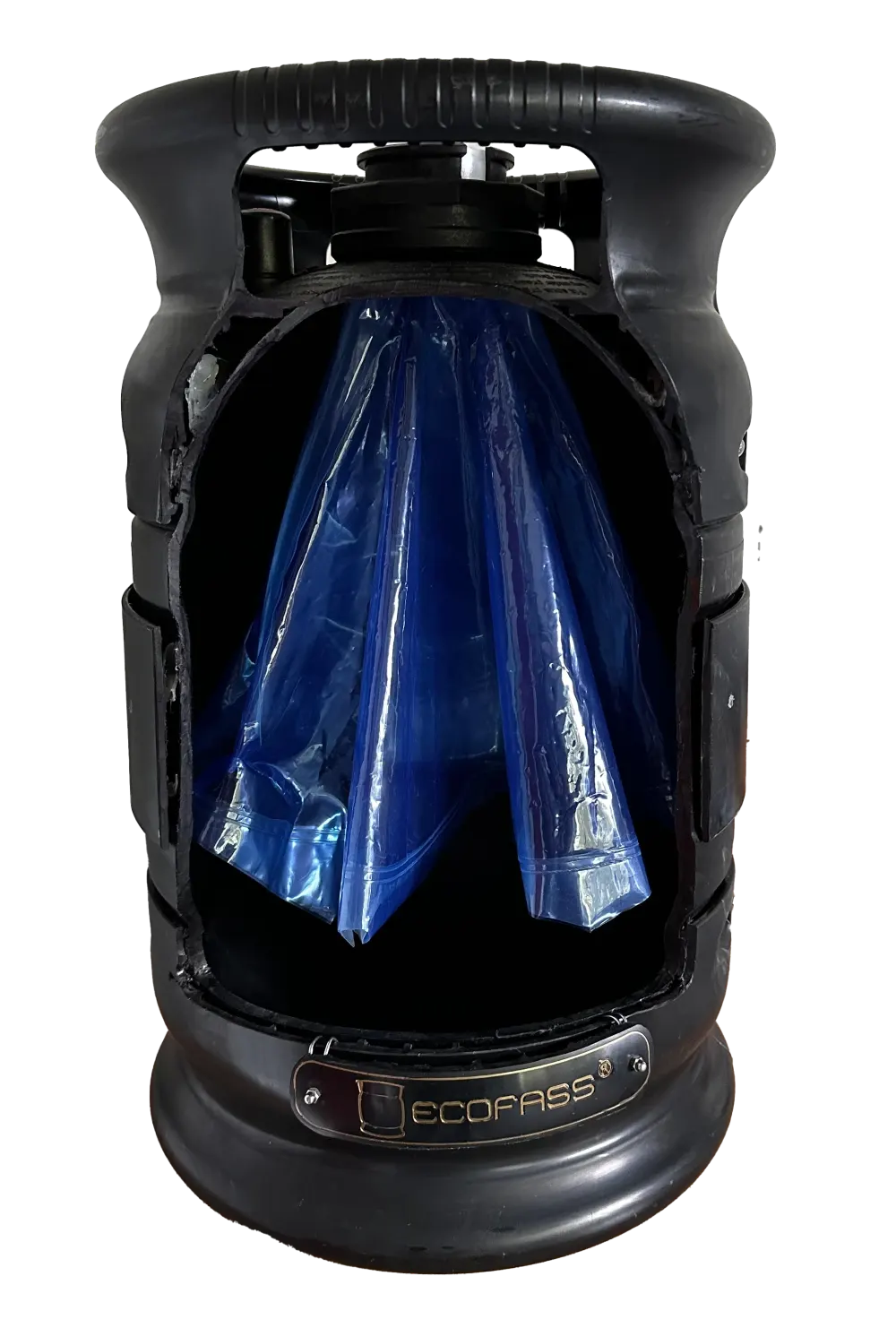
- Wine preservation: shielded from air, it keeps its qualities for up to 120 days after opening.
- Consistency of service: the same temperature and the same wine, from the first to the last glass of the keg.
- Preservation of organoleptic qualities: the gas pushes the liner without ever coming into contact with the wine.
Advantages
Productivity
Pouring a glass on tap is faster than uncorking, serving and recorking a bottle. At the counter as in the dining room, productivity comes from simpler actions: tap service can represent on the order of 17% of time saved.

- Time savings: a glass is poured at the tap, with no uncorking or recorking of a bottle.
- Ease of use: a keg connects and is replaced just like a beer keg.
- Simplified management: fewer product references to stock, less glass to sort and dispose of.
Advantages
Environmental impact
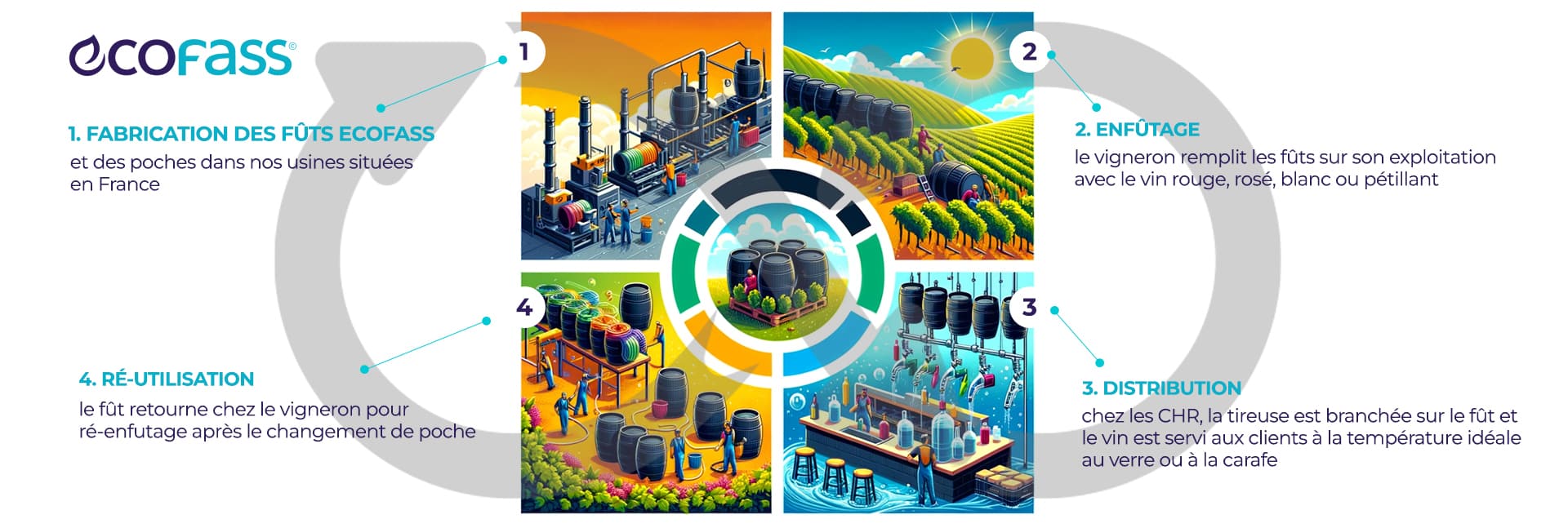
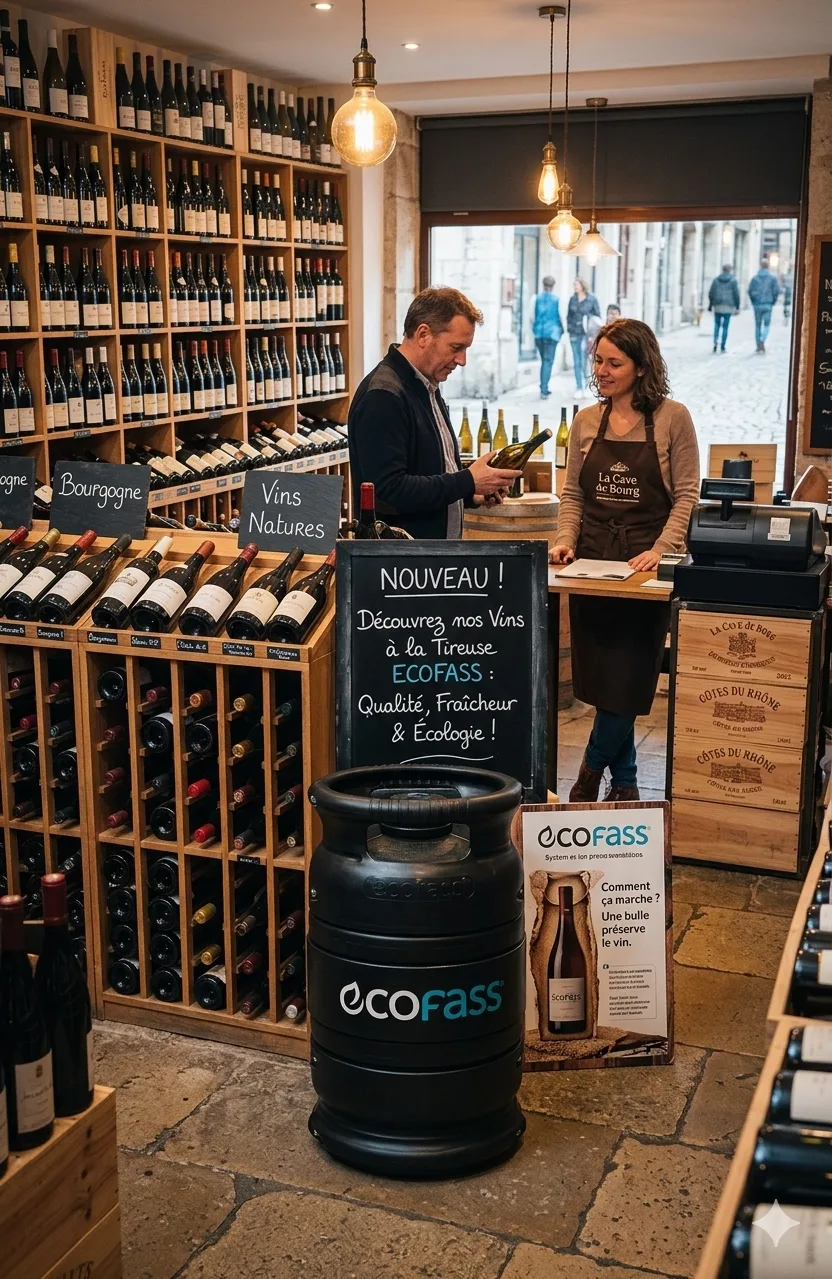
Reusable and deposit-based, the ECOFASS keg reduces packaging at the source: one keg replaces the equivalent of 26 bottles of 75 cl, i.e. 19 kg of glass avoided. Environmental impact is also measured in what is no longer wasted.

- Packaging reduction: the deposit-based keg is reused, whereas every bottle serves only once.
- Waste reduction: protected wine no longer ends up down the drain with opened bottles.
- Life-cycle analysis: the keg's impact is assessed across its whole cycle, from filling to deposit return.
And for your venue?
Measure what draught wine would bring you.
Describe your business in a few answers: we assess your project and come back to you with a concrete recommendation.