
Solutions
Wine on tap
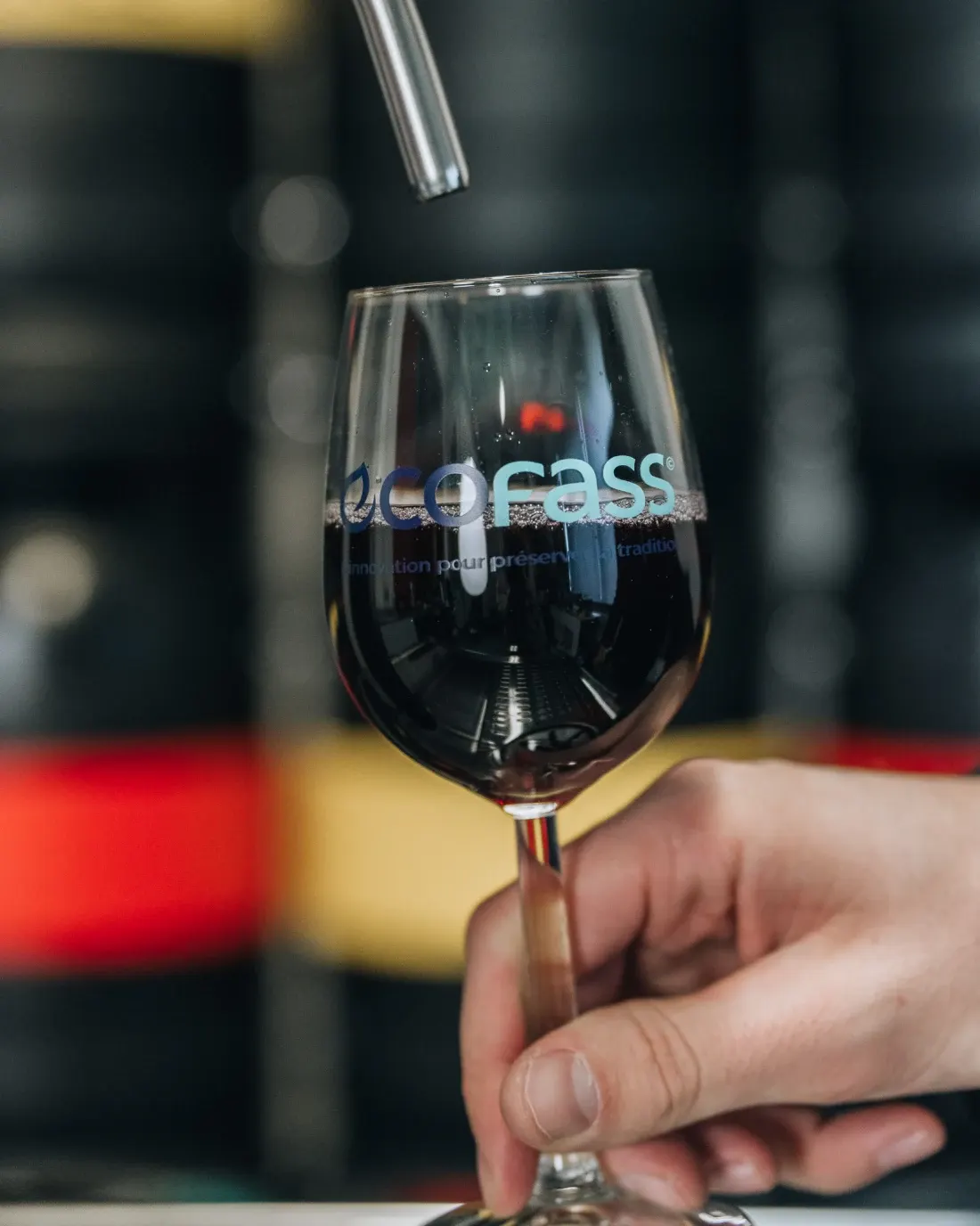
A wine served by the glass from a keg, like a beer on tap — no air, no loss, no open bottle. Here is how it works, and what it changes at service.
Wine on tap
What is wine on tap?
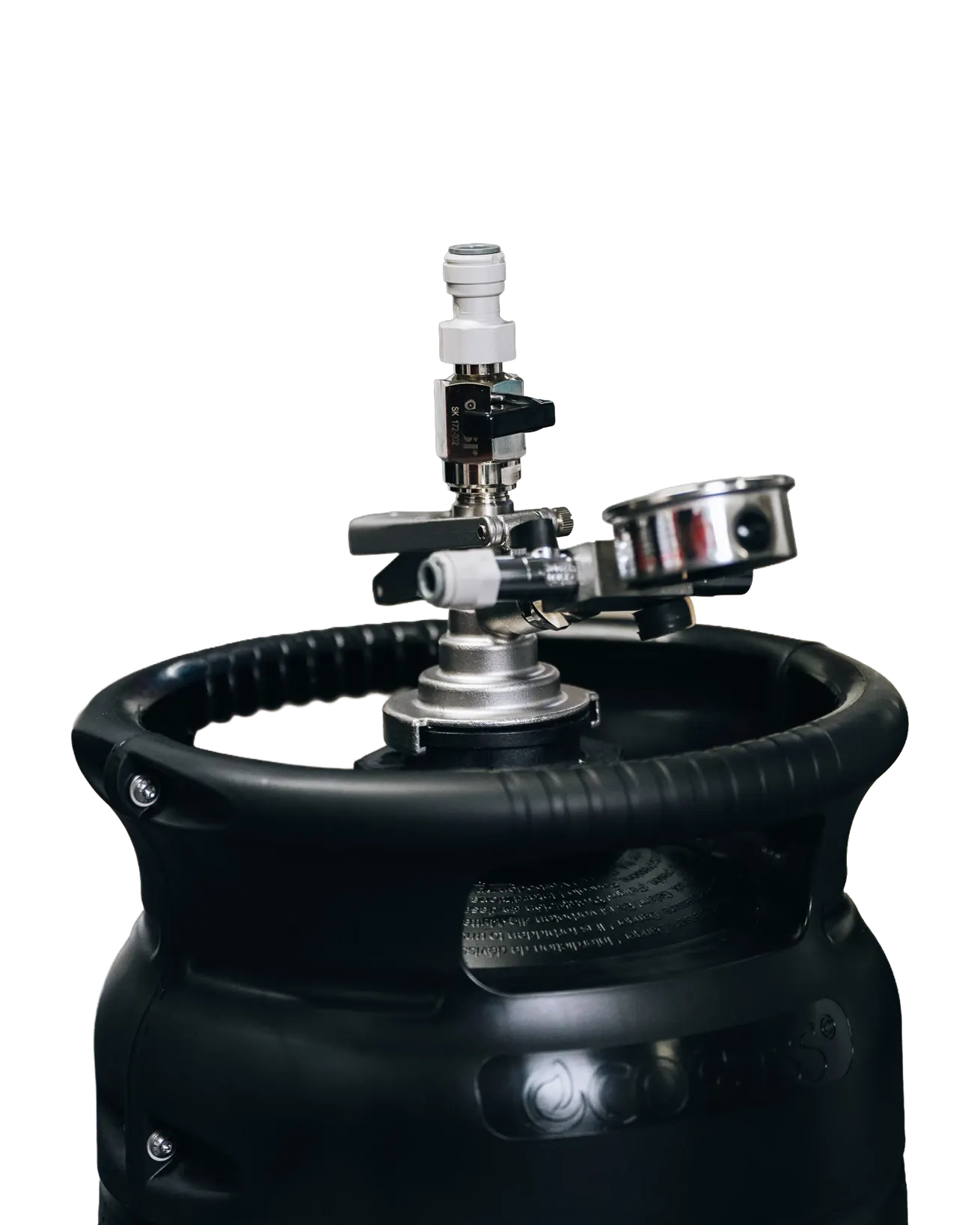
The principle is simple: the wine is packaged in a flexible liner inside a reusable keg, then served by the glass from a tap. The gas pushes on the liner without ever coming into contact with the wine, which stays protected from oxidation from the first glass to the last. A complete system connects the winegrower's vintage to the customer's glass — the liner, the keg, the tap line — each playing a precise role in preservation.
Wine on tap
Common misconceptions
"Wine on tap is for entry-level wine", "the gas alters the wine", "it's complicated to install": these objections are well known, and they deserve real answers. Most of them stem from confusion with older systems where the gas passed through the wine. In an ECOFASS keg, the gas never meets the wine — let's take these misconceptions one by one.
"It's for entry-level wine"
It is exactly the same wine: the one the winegrower fills into the liner from the vat. The format changes preservation and service, not what is in the glass.
"The gas alters the wine"
Dispensing runs on neutral gas and, thanks to the oxygen-barrier liner, the gas never comes into contact with the wine: it compresses the liner, nothing more.
"It's complicated to install"
The kegs fit the standard installations of the hospitality trade: type "A" or "S" coupler heads, existing beer tap. The keg connects like a beer keg.
Wine on tap
Comparison: bottled wine or wine on tap
Compared to the bottle, the question is not "which is the better wine" — it's the same wine. The real question is what happens to it once opened: an opened bottle oxidizes within a few days, while an ECOFASS keg keeps the wine sheltered from air until the last glass served. For service by the glass, that is where the comparison plays out — on what each format preserves after opening, and on what it causes to be lost.
| Criterion | 75 cl bottle | Draught keg |
|---|---|---|
| Storage after opening | A few days | Up to 120 days |
| Glasses equivalent | 6 glasses | 160 glasses (20 L keg) |
| Serving gesture | Uncork, pour, recork | Pour by the glass at the tap |
| Packaging | Single use — 19 kg of glass for 26 bottles | Returnable, reusable keg |
Wine on tap
Frequently asked questions
Two questions come up with almost every professional discovering wine on tap: how the system works, and what it really changes at service. The answers below are deliberately complete and self-contained — each can be read independently of the rest of the page, and covers the essential points of the ECOFASS system.
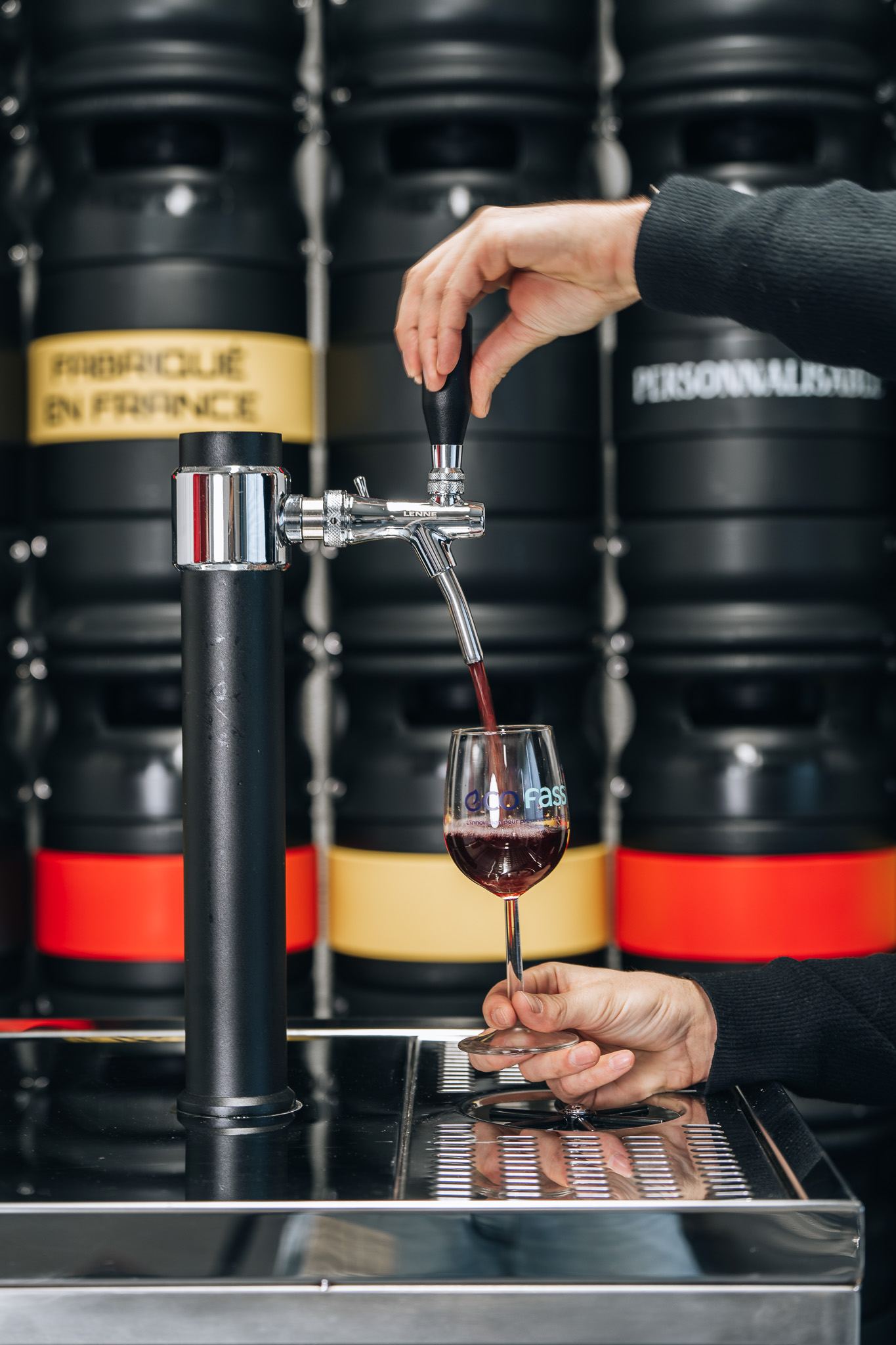
An ECOFASS system packages the wine in a flexible liner placed inside a reusable keg, then serves it by the glass on tap: the gas compresses the liner without ever touching the wine. The winegrower fills the liner from their vat, the keg reaches the counter, and every glass is poured like a beer on tap. The liner retracts as service proceeds, so the remaining wine is never in contact with air and keeps its qualities for up to 120 days after opening.
Choosing wine on tap means serving wine by the glass with no loss: no more opened bottle to throw away, steady service and wine protected from oxidation for up to 120 days after the keg is opened. It also means less handling and less packaging — an ECOFASS keg replaces the equivalent of 26 75cl bottles, or 19 kg of glass saved — and service on tap can represent on the order of 17% of time saved. The wine itself remains exactly what the winegrower put into the liner.
Switch to draught
See the system in action.
One demonstration is enough to measure what wine on tap changes at service — or describe your project and we'll assess it together.